Best Alloy Wheel Cleaner: How to Choose the Right Wheel Cleaner
October 21, 2026 by Clean My Vehicle
Choosing the best alloy wheel cleaner is not simply a matter of buying the strongest product you can find. The right cleaner depends on your wheel finish, how dirty the wheels are and the type of contamination you are trying to remove.
Brake dust, traffic film and road grime can quickly make otherwise clean wheels look neglected. But reaching immediately for an aggressive chemical is not always necessary. For many regularly maintained cars, a non-acidic wheel cleaner combined with a suitable wheel brush provides a practical way to tackle everyday wheel contamination. For more stubborn contamination, particularly embedded iron particles from brake dust, an iron-reactive wheel cleaner may be useful.
Here is how to choose the right option and clean your wheels effectively without using a stronger product than the job requires.
Why Do Alloy Wheels Get So Dirty?
Wheels operate in one of the harshest areas of the vehicle. They are constantly exposed to road spray, dirt, traffic film and contamination produced around the braking system. Brake dust in particular can accumulate across the wheel face, inside the spokes and within the wheel barrel.
This is why wheels often become dirty considerably faster than the upper bodywork. Regular cleaning helps prevent contamination from becoming increasingly difficult to remove and means you can usually clean the wheels without immediately reaching for your strongest chemical.
What Is the Best Alloy Wheel Cleaner?
There is no single wheel cleaner that is automatically best for every car. For regular maintenance cleaning, a good non-acidic wheel cleaner is an excellent place to start.
Clean My Vehicle's Non Acidic Wheel Cleaner is designed for cleaning alloy and steel wheels and tackling brake dust, road grime and general wheel contamination. For cars cleaned frequently, this is likely to be the type of cleaner you will reach for most often.

For wheels where you particularly want an alloy-focused cleaning option, Alloy Safe Wheel Cleaner is another useful choice.
The important point is to match the product to the wheel and contamination rather than assuming stronger always means better. Always read the individual product directions before use and, if you are unsure about a specialist wheel finish, check the wheel manufacturer's care advice.
Non-Acidic vs Acid Wheel Cleaner
This is one of the most important distinctions when choosing a wheel cleaner.
Non-acidic wheel cleaners
A non-acidic cleaner can be a useful choice for routine valeting and detailing. Depending on the individual formulation, it can help loosen brake dust, road grime, traffic film and general dirt. You can then agitate difficult areas with an appropriate wheel brush before thoroughly rinsing the wheel.
Acid wheel cleaners
Acid wheel cleaners can offer powerful cleaning performance and are used professionally for certain applications, but wheel finish and product instructions become particularly important. For most motorists maintaining their own car regularly, there is rarely a reason to begin with the strongest chemical available.
If you are unsure what finish your wheels have, check the wheel or vehicle manufacturer's guidance before using a more aggressive cleaner. Painted, lacquered, polished, diamond-cut and other specialist finishes can require different care.
What Is the Best Wheel Cleaner for Brake Dust?
Brake dust can range from a light dusty coating to contamination that has accumulated around spokes and wheel barrels. For normal contamination, begin with your regular wheel cleaner.
When iron contamination is more stubborn, an iron-reactive wheel cleaner can provide another option. Clean My Vehicle stocks Devils Bleeding Wheel Cleaner, an iron-reactive, colour-changing wheel cleaner.
You do not necessarily need an iron-reactive product every time you wash the car. Think of it as another tool for contamination that your normal maintenance cleaner is not adequately removing.
How to Clean Alloy Wheels Properly
1. Make sure the wheels are cool
Avoid applying wheel-cleaning chemicals to hot wheels unless the particular manufacturer's directions explicitly permit it. Working on cool wheels gives you more control over the cleaner and reduces the risk of it drying prematurely.
2. Remove loose contamination
If appropriate for the product you are using, rinse away loose dirt first. Follow the directions supplied with your particular wheel cleaner because application instructions can differ between products.
3. Apply your wheel cleaner
Cover the areas requiring cleaning, including between the spokes where practical. Do not allow the product to dry on the wheel unless its instructions specifically state otherwise.
4. Agitate stubborn areas
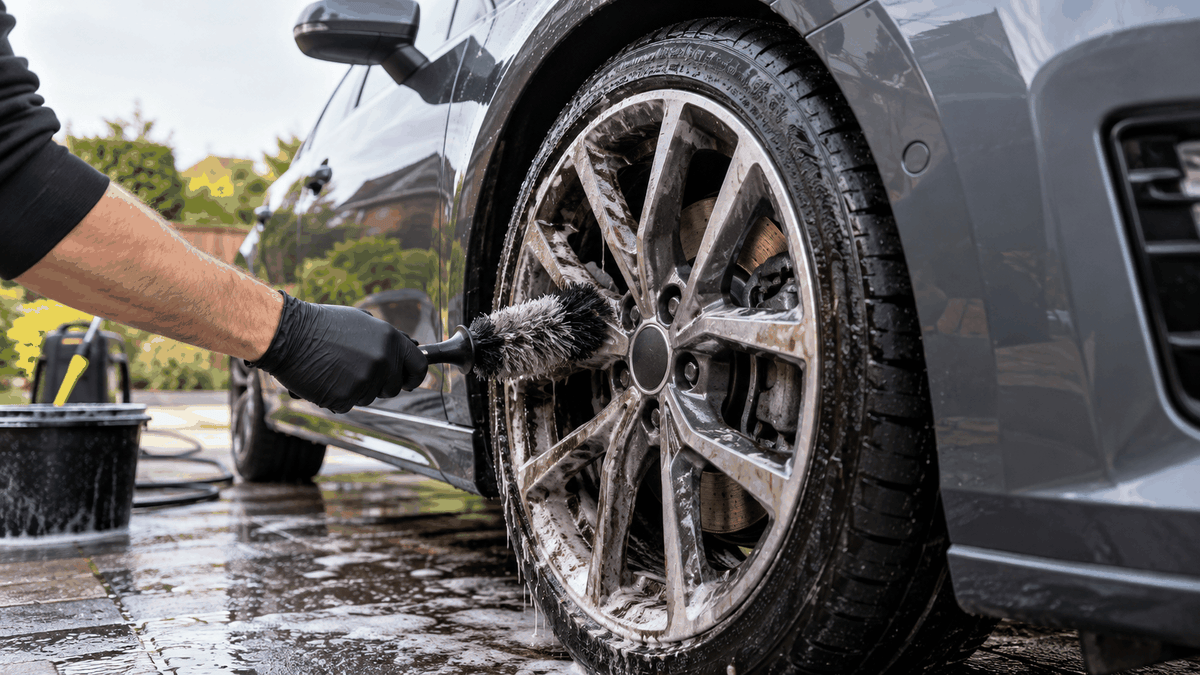
Chemical cleaning and mechanical agitation work well together. A dedicated wheel and rim cleaning brush helps reach between spokes and into areas that are difficult to clean with a wash mitt.

For deeper barrels and awkward wheel designs, a longer brush such as the Deluxe Alloy Wheel Grill & Spoke Brush can make the job easier.
5. Rinse thoroughly
Once the cleaner has done its job, rinse the wheel thoroughly and repeat the process on the remaining wheels. The RAC's car-washing guidance also recommends dedicated wheel cleaner and separate brushes, and advises rinsing the wheels thoroughly after cleaning.
Do You Need a Wheel Brush?
For a lightly dirty wheel, chemical cleaning and rinsing may remove much of the contamination. However, brushes become especially useful around wheel nuts, narrow spokes, wheel barrels, recessed areas and stubborn brake dust.
Keeping wheel brushes separate from tools used on your paintwork is sensible because wheels can carry heavy road contamination and brake dust. Choose brushes intended for vehicle detailing and keep them clean between uses.
Can You Use Car Shampoo on Alloy Wheels?
For lightly contaminated, regularly maintained wheels, your normal car shampoo may sometimes be enough. However, dedicated wheel cleaners are formulated for the types of contamination commonly found around wheels.
A useful strategy is therefore to use the least aggressive product capable of doing the job. A frequently maintained car might only need shampoo or a routine wheel cleaner during many washes, while neglected wheels may require a dedicated cleaner, agitation or an iron-removal stage.
What Should You Avoid When Cleaning Alloy Wheels?
Avoid treating every wheel in exactly the same way. Different wheels can have painted, lacquered, polished, diamond-cut or other specialist finishes.
You should also avoid allowing cleaning chemicals to dry unnecessarily, particularly on warm wheels. Another mistake is using aggressive or dirty brushes that could mark a delicate finish. Use tools designed for vehicle detailing and make sure they are clean before they touch the wheel.
If you are unsure about a specialist finish, check the wheel manufacturer's cleaning recommendations first.
Which Wheel Cleaner Should You Choose?
For regularly maintained alloy or steel wheels, start with Clean My Vehicle's Non Acidic Wheel Cleaner. For an alternative aimed specifically at alloy and steel wheel cleaning, consider Alloy Safe Wheel Cleaner.
For stubborn iron-rich brake contamination, Devils Bleeding Wheel Cleaner gives you an iron-reactive option. Then combine the appropriate chemical with a wheel cleaning brush when agitation is required.
The goal is not to use the strongest chemical every time. It is to use the right cleaner, safely, for the contamination in front of you.
Once your wheels are clean, continue with a safe pre-wash and contact-wash routine. Our guide to snow foam vs pre-wash explains which pre-wash method may suit the rest of the vehicle.
Frequently Asked Questions
What is the best cleaner for alloy wheels?
For regular maintenance, a suitable non-acidic wheel cleaner is a practical starting point. More stubborn iron contamination may require an iron-reactive cleaner. Always consider the wheel finish and follow the cleaner manufacturer's directions.
Is non-acidic wheel cleaner safe for alloy wheels?
A product specifically labelled as suitable for alloy wheels can be used according to its directions. Specialist or damaged finishes may require additional care, so check the wheel manufacturer's recommendations when unsure.
How do you remove stubborn brake dust from alloy wheels?
Start with an appropriate wheel cleaner and agitation using a detailing brush. Persistent iron-rich brake contamination may benefit from a dedicated iron-reactive cleaner.
Should you clean wheels before washing the car?
Cleaning the wheels early in the wash is practical because they are often among the dirtiest areas of the vehicle. Keeping wheel brushes and wash tools separate also helps avoid transferring heavy wheel contamination to paintwork.
Can you use a pressure washer on alloy wheels?
A pressure washer can help rinse loosened contamination. Use an appropriate pressure and distance, consider the condition and finish of the wheel, and follow the vehicle or wheel manufacturer's care guidance.
Keep Your Wheels Cleaner with Clean My Vehicle
Whether you are maintaining your own car or cleaning vehicles professionally, having the right wheel cleaner and brushes makes the job considerably easier.
Shop Clean My Vehicle's wheel cleaners and detailing brushes to build the right wheel-cleaning setup for your vehicle.