How to Clean Cloudy Headlights: Restore Clarity Safely
November 06, 2026 by Clean My Vehicle
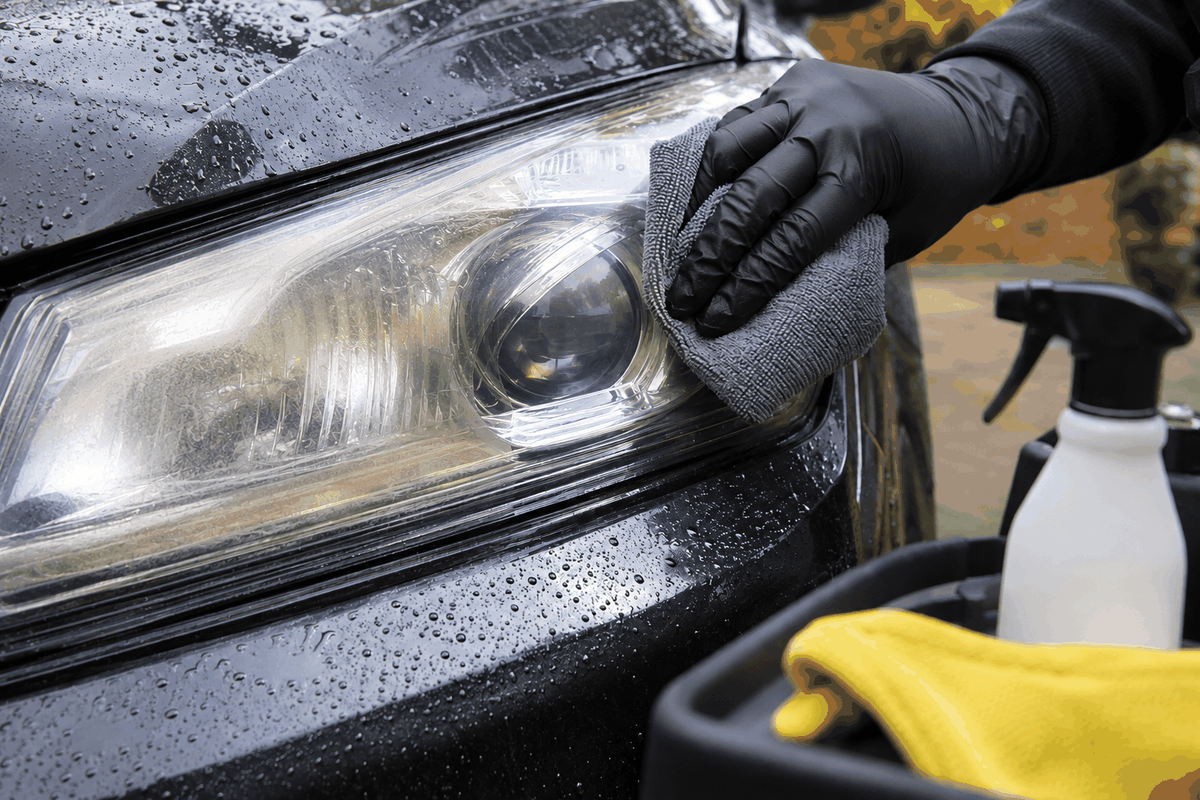
To clean cloudy car headlights, start by washing away surface dirt with a suitable car-cleaning product and a clean microfibre cloth. If the lens remains yellow or hazy after cleaning, the problem may be oxidation or deterioration of its outer coating, which usually requires a dedicated headlight restoration process rather than ordinary washing.
Cloudy headlights can make an otherwise well-maintained car look tired. More importantly, severe deterioration can affect the amount or pattern of light produced by the headlamp. The key is understanding whether your headlights are simply dirty or whether the lens itself has deteriorated.
Why do car headlights become cloudy?
Most modern car headlights have a transparent plastic outer lens. Over time, sunlight, weather, road grime and repeated cleaning can affect its surface. Common problems include surface dirt, yellowing, fine scratches and deterioration of the protective coating. If the cloudiness disappears after washing, it was probably contamination. If the lens remains hazy, the material or coating may need restoration.
Step 1: Wash the headlights thoroughly
Before polishing anything, wash the surrounding bodywork and headlight lens. Use a suitable vehicle shampoo or pre-wash product to remove dirt, road film and loose contamination. Rinse thoroughly and avoid rubbing abrasive grit across the plastic. A clean microfibre cloth is useful for the final wipe.
Explore our exterior car-cleaning products for the initial washing stage.
Step 2: Check whether the cloudiness remains
Once the lens is clean and dry, inspect it in good lighting. Look for yellowing, a milky appearance, surface scratches, cracks or moisture trapped inside the headlamp. These issues require different solutions.
If the haze is on the outside, restoration may help. If condensation or water is trapped inside the unit, exterior polishing will not fix the underlying problem; the seal or headlamp assembly may need attention.
Step 3: Choose a suitable headlight restoration method
For oxidation affecting the outside of a plastic lens, a dedicated headlight restoration kit is generally the best starting point. Such kits may use controlled abrasion or polishing to remove deteriorated surface material, followed by a protective coating.
Follow the kit instructions carefully. Some systems require masking surrounding paintwork, sanding in stages, machine polishing or a specific curing period. Do not assume a general-purpose car paint compound is suitable for every plastic headlight lens. Clean My Vehicle stocks polishing products and accessories, but confirm the suitability of any individual compound for polycarbonate headlights before using it.
Step 4: Protect the lens after restoration
Many headlights originally have a protective surface coating. Removing deteriorated material without replacing suitable protection may leave the lens vulnerable to further weathering. Choose a restoration system with appropriate UV protection or follow the headlight manufacturer's approved procedure. Conventional car wax should not be presented as a permanent substitute for a purpose-designed protective coating.
Step 5: Clean and maintain your headlights regularly
Once the lenses are clear, keep them clean during normal car washing. Remove road film, insects and dirt gently rather than scrubbing aggressively. Use clean cloths and avoid unnecessarily abrasive products. If yellowing returns, inspect the protective coating and consider professional restoration.
Can cloudy headlights cause an MOT failure?
Yes, if their condition is sufficiently serious. The UK government's MOT inspection manual covers headlamp condition, light output and beam pattern, and a seriously defective headlamp lens can be a major defect. This does not mean every slightly cloudy headlight automatically fails an MOT. If a lens is heavily yellowed, cracked or affecting light output, have it checked promptly rather than waiting for the next test.
See the official GOV.UK MOT headlamp inspection requirements.
Should you use toothpaste or household cleaners?
DIY videos sometimes recommend toothpaste, baking soda or other household products. Abrasive household products may temporarily change the appearance of a lens, but they are not a reliable replacement for a restoration system designed for automotive headlight plastics. They may also leave the lens without suitable long-term protection. Use a product intended for the material and condition being treated.
When should you replace a headlight instead?
Cleaning or polishing cannot solve every problem. Replacement or professional repair may be needed if the lens is cracked, badly damaged or leaking, or if internal reflectors and other components have deteriorated. Headlamp alignment and operation must also be correct: a clear lens alone does not guarantee the lighting system meets MOT requirements.
Frequently asked questions
Can cloudy headlights be cleaned without sanding?
Yes, if the cloudiness is mainly surface dirt. More advanced oxidation may require controlled polishing or abrasion using a dedicated restoration system.
Why do headlights turn yellow?
Weathering and UV exposure can deteriorate the outer plastic or its protective coating, producing a yellow or cloudy appearance.
Will car shampoo remove headlight oxidation?
Car shampoo removes dirt and road film but does not normally reverse deterioration of the lens material.
How long does headlight restoration last?
It depends on the condition of the lens, restoration method, protective coating and exposure to the elements. There is no universal lifespan.
Can cloudy headlights fail an MOT?
Yes. Serious lens defects or lighting problems can lead to an MOT failure, although slight cloudiness alone does not necessarily mean failure.
Final thoughts
If your headlights look cloudy, clean them first and assess the condition before attempting restoration. Ordinary dirt needs a straightforward wash, while oxidised lenses may need a specialist restoration system.
For regular maintenance, browse our exterior cleaning products and microfibre cloths to keep your vehicle looking its best.