Cutting Compound vs Polish: Which Does Your Car Need?
October 27, 2026 by Clean My Vehicle
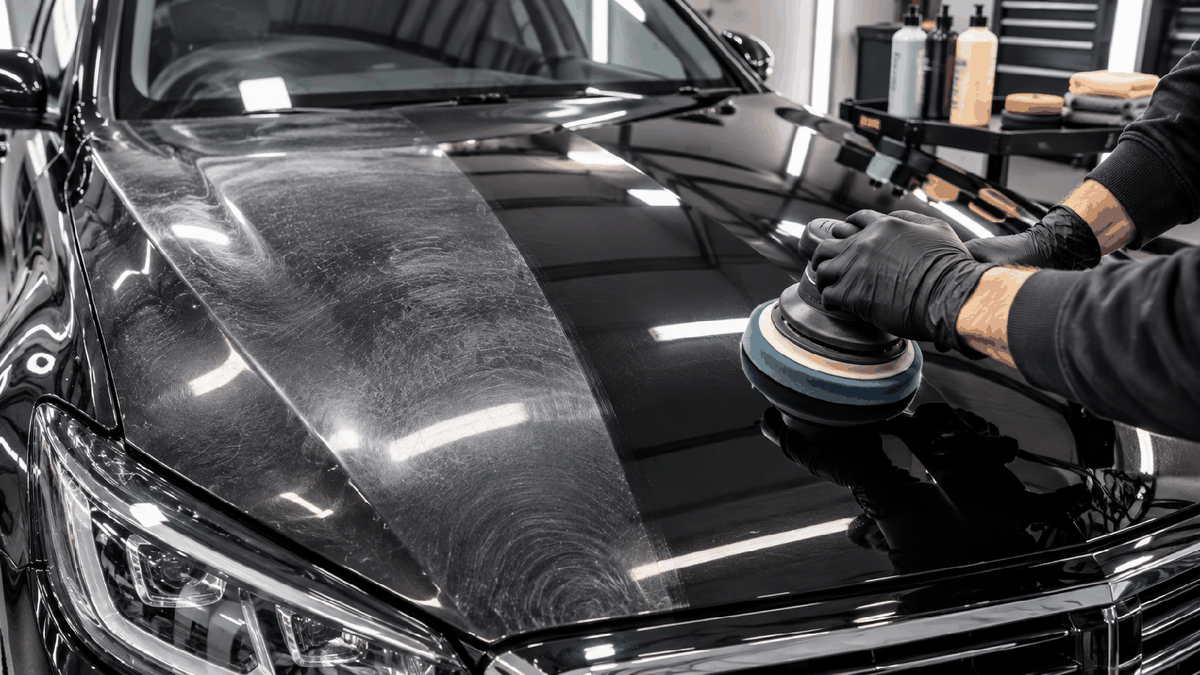
Cutting compound vs polish comes down to the level of paint correction your car needs. A cutting compound removes a greater amount of paint defects such as oxidation, heavier swirl marks and sanding marks, while a finishing polish uses a finer abrasive action to refine the surface, improve gloss and remove lighter haze or polishing marks.
If your paint is heavily marked, you may need to compound first and then finish with a finer polish. If the paint only has light swirls or lacks gloss, starting with a finishing polish may be enough.
The important part is not simply choosing the strongest product available. Good paint correction means using the least aggressive combination that achieves the result you need.
What Is a Cutting Compound?
A cutting compound is an abrasive paint-correction product designed to remove or reduce visible defects in the upper surface of automotive paint or clear coat.
Depending on the compound, pad, machine and paint system, this can include oxidation, swirl marks, sanding marks, scratches that have not penetrated too deeply and other surface imperfections.
For more substantial correction, browse our car polishing compounds and finishing polishes.
One option is 3M Perfect-It Fast Cut Plus Extreme, an aggressive cutting compound intended for paint-defect correction.
3M's paint-finishing guidance also demonstrates why cutting and finishing can be treated as separate stages, moving from defect removal towards progressively finer refinement where required.
What Is Finishing Polish?
Finishing polish is generally less aggressive. Rather than concentrating on heavier defects, its purpose is to refine the finish after correction or improve paint that only requires lighter work.
A finishing stage can reduce haze and fine polishing marks while improving clarity and gloss.
For example, 3M Extra Fine Plus Finishing Polish can be used as the refining stage following heavier correction.
For particularly demanding dark finishes, 3M Perfect-It Ultrafina SE provides a further finishing option.
Cutting Compound vs Polish: Which Should You Use?
When deciding between cutting compound vs polish, look at the condition of the paint rather than automatically reaching for the most aggressive product.
Light swirls, slight haze or paint that mainly needs its gloss refining: try an appropriate finishing polish first.
Moderate oxidation, more obvious swirls or defects that a fine polish cannot correct: a cutting compound may be necessary.
Heavier correction: compound first, inspect the finish and follow with a finer polish if the cutting stage has left haze or polishing marks.
Paint already in good condition: aggressive compounding is normally unnecessary. A mild finishing product may be all that is required.
If you are unsure, carry out a small test section first.
Why Start With the Least Aggressive Method?
Machine polishing removes a small amount of material from the paint or clear coat. The aim is therefore not to remove as much paint as possible; it is to achieve the desired correction while removing as little as reasonably necessary.
A small test section helps establish whether your chosen combination of product and pad is sufficient before committing to the whole vehicle.
This is particularly important because paint hardness and condition vary between vehicles and panels. A combination that corrects one vehicle quickly may behave differently on another.
Does the Polishing Pad Matter?
Yes. The liquid is only one part of a polishing combination.
Pad type, machine, speed, pressure, working time and the paint itself can all affect the result.
Clean My Vehicle stocks 3M Perfect-It Green Foam Compounding Pads 150mm for the cutting stage.
That is also why simply comparing two bottles by how “aggressive” they sound does not tell the whole story.
One-Stage vs Two-Stage Paint Correction
A one-stage correction uses one main polishing combination to improve the finish. It can make sense when defects are relatively light and the objective is a noticeable improvement rather than maximum correction.
A two-stage correction typically uses a more aggressive compound first and a finer polish afterwards.
The first stage deals with the more noticeable defects. The second refines the surface and restores greater clarity and gloss.
For a complete matched cutting option, Clean My Vehicle also carries the 3M Perfect-It Fast Cut Plus Extreme Kit with Green Pads.
Another machine-compounding option is Farécla G3 Advanced Liquid Compound 1L.
Can Compound Remove Scratches Completely?
Sometimes—but not every scratch should be polished out.
If a defect is confined to the correctable upper portion of the finish, polishing may substantially reduce or remove its appearance. A scratch that has penetrated too deeply may require paint repair instead.
Trying to chase a deep scratch with increasingly aggressive polishing can remove unnecessary clear coat without safely eliminating the defect.
When in doubt, prioritise preserving the paint rather than pursuing 100% correction.
Prepare the Paint Before Polishing
Never use machine polish as a substitute for properly cleaning the vehicle.
Wash and decontaminate the paint first so that loose grit and bonded contamination are not dragged around by the polishing pad.
The surface should also be cool and suitably dry before correction begins.
- Inspect the paint under good lighting.
- Choose a small test area.
- Begin with the least aggressive sensible combination.
- Work the product according to its instructions.
- Remove residue with a clean microfibre.
- Inspect the area.
- Increase the level of cut only if the test section needs it.
What Should You Use After Compounding?
After a heavier cutting stage, inspect the panel carefully.
If the compound has corrected the original defects but left haze or fine polishing marks, move to a finer finishing polish rather than repeatedly compounding the area.
Once you are satisfied with the correction, remove polishing residue and apply your chosen paint protection.
The goal is a clean, refined finish—not simply the maximum possible amount of cutting.
Cutting Compound vs Polish: The Simple Answer
For cutting compound vs polish, choose compound when the paint genuinely needs more defect removal and choose finishing polish when it needs lighter correction or refinement.
For many cars requiring noticeable paint correction, the best result comes from using both: compound to correct the defects, then finishing polish to refine the surface.
For lightly marked paint, however, jumping immediately to an aggressive compound can be unnecessary.
FAQs
Is cutting compound the same as polish?
No. Both are abrasive paint-correction products, but cutting compound generally provides greater defect removal while finishing polish is designed for finer correction and refinement.
Should I compound or polish first?
If the paint genuinely requires heavy correction, compound comes first and a finer polish can follow. For light defects, test a finishing polish first.
Does compound remove swirl marks?
A suitable compound can remove or reduce many swirl marks, but the result depends on defect depth, paint condition, pad, machine and technique.
Do I need to polish after using compound?
Not always. Inspect the paint after compounding. If you can see haze, fine marks or room for greater clarity, a finishing stage is appropriate.
Can I compound my car by hand?
Some products can be worked by hand, but products intended specifically for machine polishing should be used according to their manufacturer's instructions.
Ready to Correct Tired or Swirled Paint?
Browse the Clean My Vehicle Polish & Compounds range to compare cutting compounds, finishing polishes and paint-correction products for your next detail.