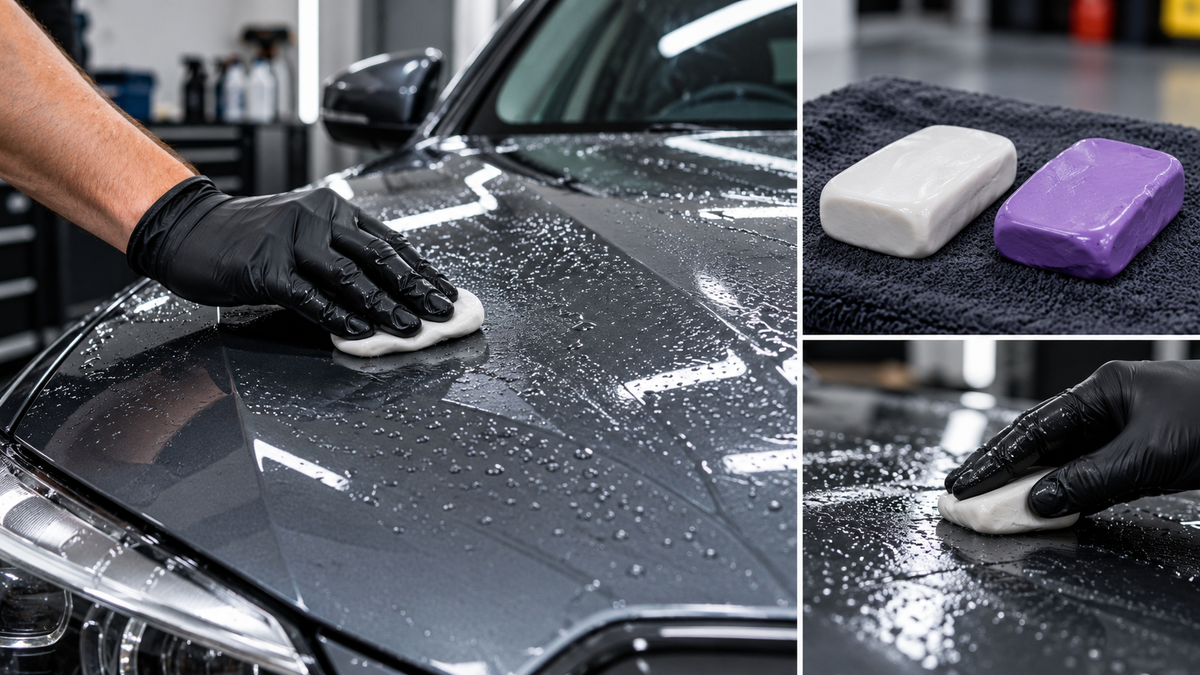
How to Clay Bar a Car: Step-by-Step Paint Decontamination Guide
October 23, 2026 by Clean My Vehicle
You can thoroughly wash a car and still run your hand across the paintwork and feel a rough or gritty surface. That is often caused by bonded contamination — particles and deposits that ordinary car shampoo cannot completely remove.
This is where a car clay bar becomes useful.
Knowing how to clay bar a car correctly can help remove stubborn surface contamination and leave the paint feeling considerably smoother before polishing, waxing or applying another form of protection.
In this guide, we'll explain what a clay bar does, when you should use one, how to choose between fine and coarse clay and how to clay your car safely.
What Does a Clay Bar Do?
A clay bar is a paint-decontamination product designed to pick up contamination bonded to the surface of the vehicle.
Even after a proper wash, paintwork can retain deposits such as industrial fallout, overspray, tree sap residue and other environmental contamination. Meguiar's provides further guidance on automotive paint care and clay-bar decontamination.
The important distinction is that washing removes loose dirt, whereas claying is intended to deal with contamination that remains bonded to the surface.
How Do You Know If Your Car Needs Claying?
Start by washing and drying the vehicle. With clean hands, gently feel the paintwork. If it feels rough, gritty or covered in tiny raised particles despite being visibly clean, further decontamination may be worthwhile.
Don't assume every car needs aggressive claying. If contamination is light, a fine-grade clay may be sufficient. For heavier bonded contamination, a stronger decontamination process may be needed.
Fine vs Coarse Clay Bar: Which Should You Use?
Choosing the right grade is important.
Fine-Grade Clay
For lighter contamination and finishing work, use a less aggressive clay. Clean My Vehicle's Fine Grade Clay Bar is intended for lighter contamination and should be used with suitable lubrication.

Coarse-Grade Clay
Heavier contamination can require a more aggressive option. Our Professional Coarse Grade Clay Bar is designed for heavier contamination. Because coarse clay is more aggressive, inspect the finish afterwards to decide whether polishing is required.

The key principle is simple: use the least aggressive method capable of doing the job.
Should You Use Fallout Remover Before a Clay Bar?
Chemical and mechanical decontamination perform different jobs. Iron or fallout removers are designed to react with iron contamination, while clay physically removes bonded surface contamination.
Autoglym also provides established guidance on paint decontamination and detailing clay. For a heavily contaminated vehicle, chemically removing suitable contamination before claying can reduce the amount of mechanical work required.
Clean My Vehicle stocks car-cleaning products for the complete decontamination process, allowing you to pre-wash and thoroughly clean the vehicle before moving on to clay.
How to Clay Bar a Car Safely

1. Wash the Car Thoroughly
Never start claying a dirty vehicle. Remove loose road grime first with your normal pre-wash and contact-wash routine. If you want to improve your wash technique first, read our guide to washing a car safely and preventing swirl marks.
2. Work on Cool Paint
Move the vehicle out of strong direct sunlight where possible and work on a clean, cool surface.
3. Use Plenty of Clay Lubrication
Lubrication is essential. Apply suitable clay lubricant generously to both the working area and clay. You want the clay to glide across the surface rather than grab at the paint.
4. Work a Small Area at a Time
Rather than attempting an entire bonnet or door at once, divide the vehicle into manageable sections. Move the clay gently across the lubricated paint using light pressure. Don't try to force it. As contamination is removed, you should notice the clay beginning to glide more freely.
5. Cut Off a Section and Check the Clay Regularly
With the clay bars sold by Clean My Vehicle, do not fold contaminated clay back into the bar. Instead, cut off a manageable section before you begin and work with that piece.
Inspect the working surface regularly. As the clay picks up bonded dirt and contamination, it will become visibly dirty. If part of the clay becomes heavily contaminated, cut away and discard the contaminated section before continuing.
For larger jobs, cutting the clay bar into several smaller sections before starting can help reduce waste because you only need to use one section at a time. If a piece of clay is dropped on the floor, discard it rather than using it again, as it may have picked up grit that could damage the paint.
6. Wipe and Inspect the Panel
Once the area feels smooth, wipe away the remaining lubricant with a clean microfibre cloth and inspect the finish. Continue around the vehicle only where claying is actually required.
Does a Clay Bar Remove Scratches?
No. A clay bar is primarily a decontamination tool, not a scratch-removal product. It removes material sitting on or bonded to the surface. Scratches, oxidation and paint defects require a different process.
If the paint needs correction after decontamination, polishing is the next stage. This creates a useful detailing process: wash → decontaminate → polish if necessary → protect.
Should You Polish After Using a Clay Bar?
Not necessarily. Fine claying on suitable paint may leave the finish ready for protection, whereas more aggressive clay or heavily contaminated paint may leave minor marring that benefits from polishing.
Inspect the paint under good lighting rather than automatically polishing every vehicle. This is particularly important for professional valeters because unnecessary correction adds time and removes clear coat unnecessarily.
What Should You Do After Claying a Car?
Once decontamination is complete, the paint is an excellent candidate for polishing or protection. Clean My Vehicle's Hyper Wax can be used as a finishing protection stage, while Ceramic Snow Foam is another convenient option for customers wanting a hydrophobic finishing stage.
Common Clay Bar Mistakes to Avoid
Don't clay dirty paint, don't use insufficient lubricant and don't apply excessive pressure. You should also avoid repeatedly claying a surface simply because you think more must be better. Decontamination should solve an actual contamination problem rather than become an unnecessarily aggressive part of every maintenance wash.
Most importantly for our clay bars, don't fold dirty material back into the clay. Cut away contaminated sections and discard any clay that has fallen onto the ground.
Is Clay Barring Worth It?
If your paint looks clean but still feels rough, claying can make a substantial difference to how smooth the surface feels. It is especially useful before paint correction or when preparing contaminated paint for a fresh protection stage.
For enthusiasts, it can transform the preparation stage of a detail. For professional valeters and detailers, understanding when to use fine or coarse clay also helps avoid unnecessary work while producing a properly prepared surface.
Frequently Asked Questions
How often should you clay bar a car?
There is no fixed interval that suits every vehicle. Clay the paint when bonded contamination is present rather than automatically doing it at every wash. Mileage, storage conditions and environmental exposure all affect contamination.
Can you clay bar a wet car?
The important factor is adequate lubrication rather than simply having water on the panel. Use a suitable clay lubricant and follow the instructions for the clay you're using.
Can a beginner use a clay bar?
Yes, but start conservatively. Work on clean paint, use plenty of lubricant, apply light pressure and consider a fine-grade clay where contamination is relatively light.
Does clay remove iron fallout?
Clay can physically remove bonded particles, but a dedicated iron or fallout remover can chemically tackle iron contamination before mechanical claying. The two processes can complement each other.
Should I wax my car after claying?
Claying leaves the surface prepared for the next detailing stage. Once you've inspected the paint and polished it if required, applying suitable protection is a sensible finishing step.
Ready to Decontaminate Your Paintwork?
Choose the clay grade that matches the condition of your vehicle. For lighter contamination, start with our Fine Grade Clay Bar; for heavier contamination, consider our Professional Coarse Grade Clay Bar.
Once the paint is smooth and properly prepared, finish with your preferred polishing or protection products from Clean My Vehicle.