How to Wash a Car in Winter: Remove Road Salt & Grime Safely
October 26, 2026 by Clean My Vehicle
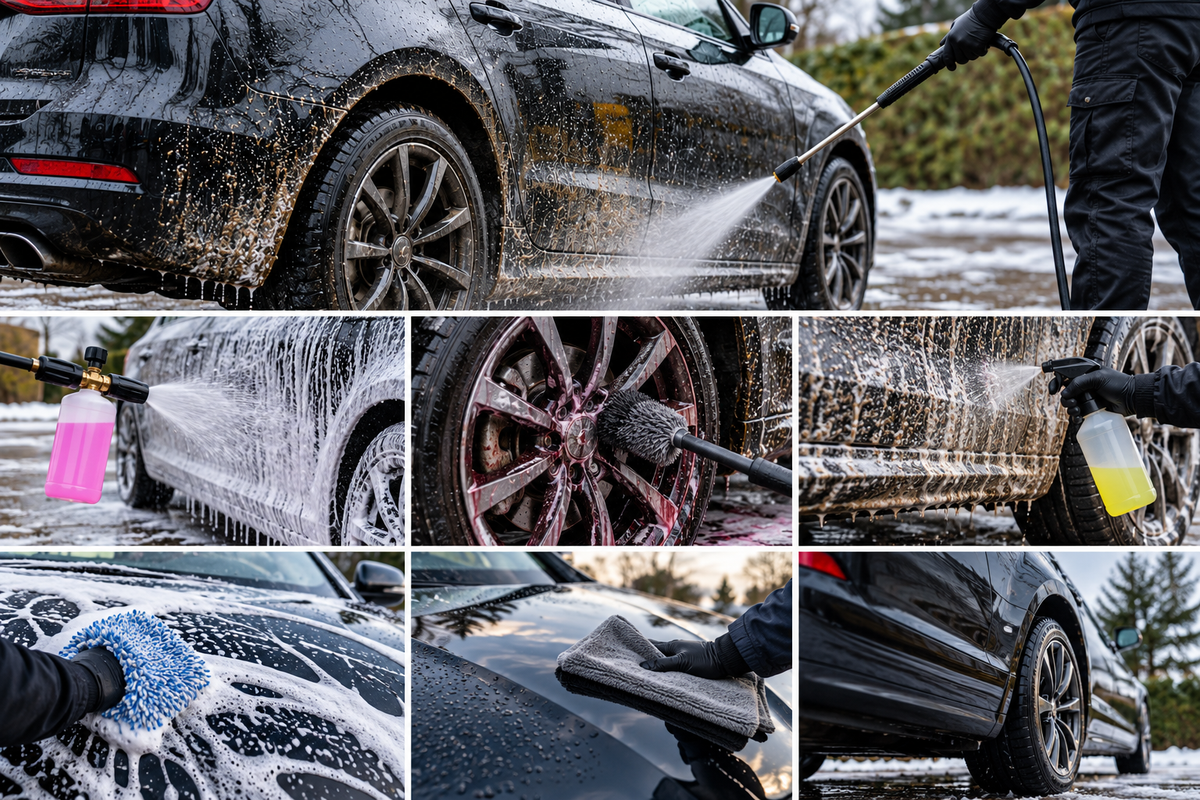
The best way to wash a car in winter is to remove as much road salt, traffic film and loose grime as possible before touching the paint. Start with a thorough rinse and pre-wash, follow with snow foam where appropriate, then contact-wash with car shampoo before rinsing and drying the vehicle properly.
Winter is one of the hardest times of year to keep a car clean in the UK. Wet roads throw dirt onto lower panels, wheel arches and the rear of the vehicle, while treated roads can leave salt residue across the bodywork.
The answer is not simply to scrub the car more aggressively. A good winter wash concentrates on pre-washing first, reducing the amount of contamination left on the paint before your wash mitt touches it.
Why Should You Wash Your Car Regularly in Winter?
Winter grime can build up surprisingly quickly. The lower doors, sills, bumpers, wheel arches, wheels and rear of the vehicle are particularly exposed to spray from wet and treated roads.
This is not just about appearance. The AA's car-care guidance recommends regular washing and highlights extra attention during winter when roads are salted. Autoglym's guidance on washing away road salt also explains why winter salt, mud and grime should not simply be allowed to accumulate.
GOV.UK also advises drivers to keep windscreens, windows and mirrors clean and to make sure lights are working before driving. See the Highway Code guidance for adverse weather for further winter-driving advice.
What Is the Best Way to Remove Winter Road Grime?
Use a pre-wash before contact washing. This is particularly worthwhile during winter because heavily contaminated paint is exactly when you want to minimise unnecessary physical contact.
Professional vehicle-care manufacturers also use pre-wash products as part of exterior cleaning systems. You can compare wider industry approaches in Autosmart's exterior-cleaning range and guidance. For real-world discussion from UK enthusiasts and professional detailers, the Detailing World forum is another useful resource covering pre-washing, snow foam and detailing techniques.
For dirtier lower panels, a suitable pre-wash such as our Citrus Cleaner Concentrate – Pre Wash can help tackle road grime and heavier soiling before the contact wash. Always follow the product instructions and never allow cleaning chemicals to dry on the vehicle.
Step 1: Rinse Away Loose Dirt
Begin with a thorough rinse. Pay particular attention to the lower doors and sills, front and rear bumpers, behind the wheels, wheel arches, wheels and tyres, and the rear of the vehicle.
The objective is to remove loose contamination before introducing a wash mitt. Avoid attacking a heavily contaminated vehicle immediately with a sponge or mitt.
Step 2: Apply a Suitable Pre-Wash
A pre-wash helps loosen heavier road film before contact washing.
Clean My Vehicle's Citrus Cleaner Concentrate is a useful option for the pre-wash stage and for tackling stubborn road grime. Apply it according to the product instructions, concentrate on the dirtier areas and allow it time to work without letting it dry. Then rinse thoroughly.
This stage can make a particularly noticeable difference to lower sections of a winter-driven car.
Step 3: Use Snow Foam
Snow foam provides another useful pre-contact cleaning stage. Our Cherry Bomb Snow Foam can be applied using a suitable snow foam lance. Allow it to dwell according to the product instructions and rinse it away before moving on to the contact wash.
Snow foam should not be treated as a replacement for every other cleaning stage. On a heavily soiled winter vehicle, combining sensible rinsing, targeted pre-wash and snow foam can reduce how much contamination reaches the wash mitt.
Step 4: Contact-Wash the Car
Once the heavier contamination has been removed, wash the car using a suitable car shampoo and clean wash mitt. Work methodically from cleaner upper sections towards dirtier lower areas rather than repeatedly carrying grime back over the paint.
Regularly rinse the mitt during the wash. If the lower panels are exceptionally dirty, treat them separately rather than continuing to wipe a heavily contaminated mitt around the rest of the vehicle.
Browse our exterior car cleaning products and valeting supplies for shampoos, pre-washes and other products for a complete wash routine.
Step 5: Clean the Wheels and Wheel Arches
Winter road grime does not only collect on paintwork. Wheel faces, barrels, tyres and arches can become heavily contaminated, so include them in the wash rather than concentrating solely on the body.
For normal wheel dirt, use a suitable wheel-cleaning product. If you are dealing with bonded iron contamination or brake dust, read our Iron Fallout Remover guide to understand when an iron-reactive cleaner is useful.
Step 6: Give the Car a Thorough Final Rinse
Rinse the vehicle carefully after washing so that shampoo and cleaning-product residue are removed. Pay attention to panel gaps, mirrors, grilles, badges and other areas where foam can collect.
If temperatures are close to freezing, be sensible about when and where you wash. Water left around doors, handles and seals can freeze when temperatures drop.
Step 7: Dry the Car Properly
Do not finish a winter wash by leaving the car covered in water. Use a clean, absorbent drying towel rather than repeatedly rubbing the paint with an unsuitable cloth.
Our Grey Microfibre Drying Towel 1100 GSM is designed for vehicle drying after the final rinse. A proper drying stage also makes it easier to spot areas you may have missed.
Should You Apply Protection After a Winter Wash?
Adding protection can be a useful final stage once the vehicle is properly clean. Hyper Wax is a concentrated spray sealant designed to add gloss and hydrophobic water repellency.
Alternatively, Ceramic Snow Foam is an after-wash finishing foam rather than a conventional pre-wash snow foam. Use it after the vehicle has been cleaned when you want an additional hydrophobic finishing stage. Neither product replaces proper cleaning.
How Often Should You Wash a Car During Winter?
There is no single schedule that suits every vehicle. A car covering motorway miles on regularly treated roads may become heavily contaminated much faster than a vehicle that travels short distances on cleaner roads.
Rather than washing to a fixed calendar, look at the amount of contamination on the car. If the lower bodywork, wheels, rear panels and glass are becoming heavily coated with winter grime, it is sensible to clean the vehicle rather than allowing layer after layer to accumulate.
What Should You Avoid When Washing a Car in Winter?
The biggest mistake is trying to remove heavy winter dirt through aggressive contact alone. Avoid scrubbing heavily contaminated paint before pre-washing it, reusing a dirty wash mitt across the entire vehicle, allowing chemicals to dry on the surface, or washing when conditions are so cold that water is likely to freeze immediately.
A Simple Winter Car-Washing Routine
Rinse → targeted pre-wash → snow foam where useful → rinse → contact wash → wheels and arches → final rinse → dry → optional protection.
The important part is reducing heavy contamination before making contact with the paint. That makes winter washing easier and more effective without turning every wash into a full detail.
Winter Car Washing FAQs
Should I wash road salt off my car?
Yes. If the vehicle has accumulated salt and winter road grime, washing it removes that contamination rather than allowing it to continue building up across the bodywork, wheels and arches.
Is snow foam enough to clean a dirty winter car?
Usually not on its own. Snow foam is useful as part of the pre-wash process, but a heavily contaminated vehicle may also benefit from targeted pre-wash followed by a proper contact wash.
Should I use citrus pre-wash before snow foam?
On heavily soiled areas, citrus pre-wash can be used to target road film and grime before the snow-foam stage. Follow the individual product instructions and do not let either product dry on the surface.
Can I wash my car when it is freezing?
It is better to avoid washing when water is likely to freeze immediately on the vehicle or the ground. Choose a milder part of the day where possible.
What parts of a car get dirtiest in winter?
Lower doors, sills, bumpers, wheels, wheel arches and the rear of the vehicle commonly collect substantial road spray and grime, so give these areas particular attention.
Get Ready for Winter Washing
Build your winter routine around effective pre-washing, snow foam, safe contact washing and proper drying. Shop our exterior car cleaning range, or browse our car cleaning bundles and kits if you want several essentials together.
For a ready-made option, the Ultimate Car Wash Kit 15L – Snow Foam, Citrus Pre-Wash & Iron Remover brings together several useful stages of a deeper exterior clean.