Iron Fallout Remover: What It Does & How to Use It Safely
October 24, 2026 by Clean My Vehicle
A car can look clean after washing but still have contamination bonded to the paintwork and wheels. One of the most common types is iron contamination, which can come from brake dust and other metallic particles.
These particles can become embedded in exterior surfaces rather than simply sitting as loose dirt. That means normal car shampoo may not remove all of them. An iron fallout remover is designed specifically for this type of contamination.
What Is Iron Fallout Remover?
Iron fallout remover is a specialist decontamination product designed to react with iron particles on vehicle surfaces. Unlike ordinary shampoo, which is primarily used to remove general dirt and road grime during a contact wash, an iron remover targets metallic contamination that has become attached to the surface.
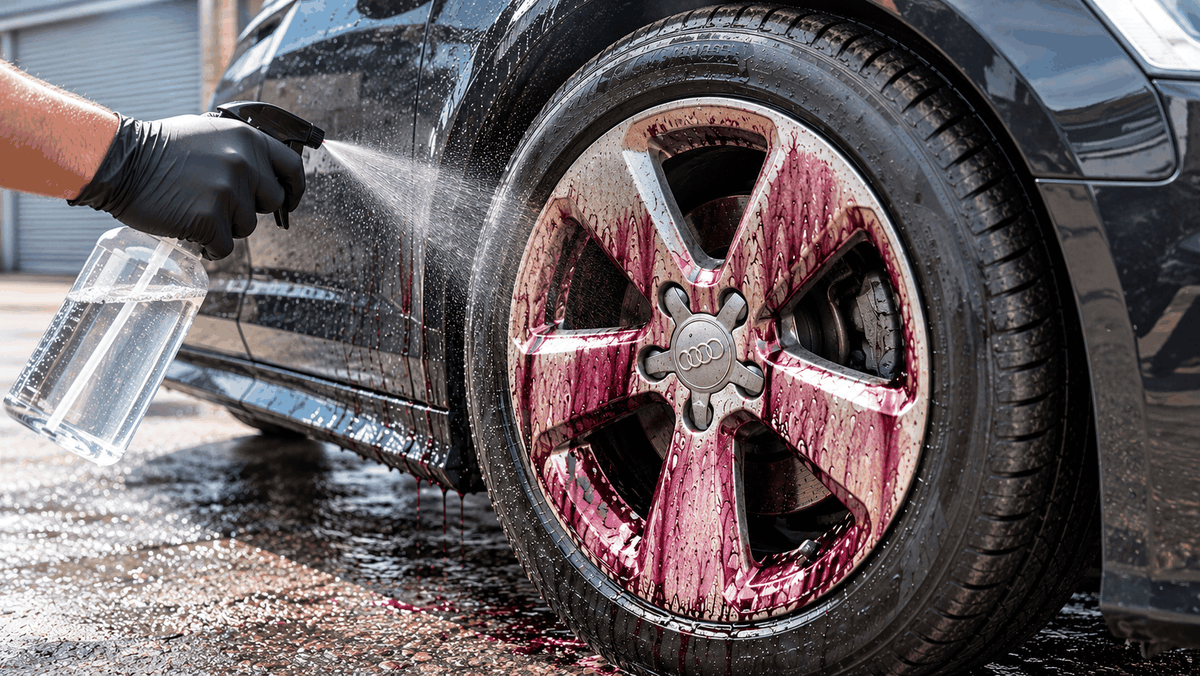
The liquid itself does not need to be red. With an iron-reactive product such as our Devils Bleeding Wheel Cleaner, the product is applied clear and changes to a red or purple colour as it reacts with iron contamination and brake dust. The colour change helps you see the reaction taking place.
Where Does Iron Contamination Come From?
Brake dust is an obvious source around wheels, but metallic contamination can also settle on bodywork. You may notice tiny orange or brown specks on lighter paint, although contamination is not always easy to see. Another clue can be paintwork that remains slightly rough even after the vehicle has been thoroughly washed.
When Should You Use Iron Fallout Remover?
Iron fallout remover is not necessarily needed during every maintenance wash. It makes more sense when there is evidence of bonded metallic contamination or when you are carrying out a more thorough decontamination before polishing, waxing or applying protection.
A useful detailing sequence is: pre-wash → contact wash → iron decontamination → clay if required → polish if required → protection.
If you are starting with a dirty vehicle, follow our guide on how to wash a car safely before moving on to bonded contamination.
How to Use Iron Fallout Remover
1. Clean the Vehicle or Wheel First
Remove loose dirt and road grime first. On a heavily soiled vehicle, a suitable pre-wash followed by a proper contact wash gives the iron fallout remover a cleaner surface to work on.
2. Work on a Cool Surface
Follow the instructions for the particular product you are using and avoid allowing chemicals to dry on the vehicle. Product directions take priority because formulations can differ.
3. Apply the Iron Fallout Remover
Apply the product evenly to the contaminated area. Our real-world photo below shows the clear product being sprayed onto an alloy wheel before the iron reaction develops.

4. Allow the Iron Reaction to Develop
As an iron-reactive cleaner contacts metallic contamination, the reaction can produce the familiar red or purple colour. The photo below is from a real Clean My Vehicle application and shows the reaction after the product has been given time to work.

Do not assume that applying more product or leaving it indefinitely will produce a better result. Follow the product's application instructions and do not allow it to dry on the surface.
5. Agitate If Required and Rinse Thoroughly
For stubborn wheel contamination, a suitable wheel brush can help agitate affected areas. Rinse thoroughly with clean water once the product has completed its recommended dwell period.
6. Check Whether Further Decontamination Is Needed
Iron fallout remover targets iron contamination, not every possible contaminant. Tar, tree sap, overspray and other bonded deposits may require a different treatment. If the paint still feels rough after chemical decontamination, read our guide on how to clay bar a car.
Iron Fallout Remover vs Clay Bar
These are not competing products because they work differently. An iron fallout remover chemically targets iron contamination, while a clay bar mechanically removes bonded surface contamination. For heavily contaminated paint, chemical decontamination first can reduce the amount of contamination that needs to be dealt with mechanically afterwards.
Can You Use Iron Fallout Remover on Alloy Wheels?
Iron-reactive cleaners are particularly useful around wheels because brake dust can contain metallic contamination. Clean My Vehicle's Devils Bleeding Wheel Cleaner is a ready-to-use, pH-neutral, iron-reactive wheel cleaner designed to tackle iron contamination, brake dust and road grime.

If your main concern is choosing a cleaner for your wheels, see our guide to choosing an alloy wheel cleaner for more information.
Iron Fallout Remover Before Polishing
Preparing paint properly becomes particularly important before machine polishing. You do not want to start paint correction while avoidable bonded contamination remains on the surface. A sensible preparation process removes ordinary dirt first, tackles relevant chemical contamination next and then assesses whether mechanical decontamination is necessary.
Iron Fallout Remover for a Full Exterior Detail
If you are building a complete wash and decontamination routine, our Ultimate Car Wash Kit 15L combines snow foam, citrus pre-wash and iron remover for the key exterior preparation stages.
A Note for Professional Valeters
Professional valeters should also consider where wash water and chemicals go. The UK Government provides pollution-prevention guidance for businesses, including responsibilities around contaminated water and drainage. Always make sure your working practices comply with the requirements that apply to your site.
Do You Need Iron Fallout Remover?
If a vehicle has metallic contamination on its paintwork or wheels, an appropriate iron fallout remover can be a valuable part of the detailing process. The important point is to use it for the problem it is designed to solve rather than adding chemicals unnecessarily to every wash.
Start with a thorough wash, chemically remove relevant contamination, inspect the surface and only move to clay or polishing when the condition of the paint requires it.
Frequently Asked Questions
Does iron fallout remover remove brake dust?
Iron-reactive products are designed to react with metallic contamination, making them particularly useful where iron-rich brake contamination is present. General dirt and road grime may still require normal wheel cleaning.
Why does iron fallout remover turn red or purple?
The colour develops as the product reacts with iron contamination. With Devils Bleeding Wheel Cleaner, the liquid is applied clear and the red or purple colour appears during the iron reaction.
Does iron fallout remover remove tar?
Not necessarily. Iron particles and tar are different forms of contamination and can require different products.
Should I use iron fallout remover before or after washing?
For a full detail, removing loose dirt first gives you a cleaner surface on which to assess and treat bonded contamination. Always follow the instructions for the specific product being used.
Do I still need a clay bar after using iron fallout remover?
Possibly. Iron fallout remover targets metallic contamination, whereas clay can remove other bonded contaminants. If the paint still feels contaminated after chemical decontamination, clay may be the next appropriate step.
Ready to Tackle Iron Contamination?
Shop Devils Bleeding Wheel Cleaner for a ready-to-use iron-reactive wheel cleaner, or explore the rest of our wheel-cleaning and exterior detailing range to build your complete car-care routine.